 comparison
Spindle Rebuild vs Replacement Cost Analysis
Table of Contents
- Spindle Rebuild vs Replacement: The Core Cost Comparison
- Signs of CNC Spindle Failure You Should Not Ignore
- CNC Spindle Repair Cost Factors That Move the Final Number
- Average Spindle Rebuild Turnaround Time and Its Impact on Downtime
- Decision Matrix: Choosing Spindle Rebuild or Replacement by Failure Type
- Total Cost of Ownership: Beyond the Repair Invoice
- How Spindle Rebuild Performance Compares to Factory Specifications
- Frequently Asked Questions
Last Updated: August 29, 2026
Spindle Rebuild vs Replacement: The Core Cost Comparison
A spindle rebuild vs replacement cost analysis is the first decision most maintenance managers face after a CNC spindle failure. The core tension is this: a professional spindle rebuild restores a precision component to factory specifications at a fraction of the cost of a new unit, but only when the failure mode and spindle condition justify it. When they don't, a rebuild delays the inevitable and adds labor cost to a machine that needed a new spindle from day one.
Below, we'll walk through what each path actually costs, which failure types favor each option, and how to calculate the true total cost of ownership so you're making this decision on data, not instinct.
What a Professional Spindle Rebuild Includes
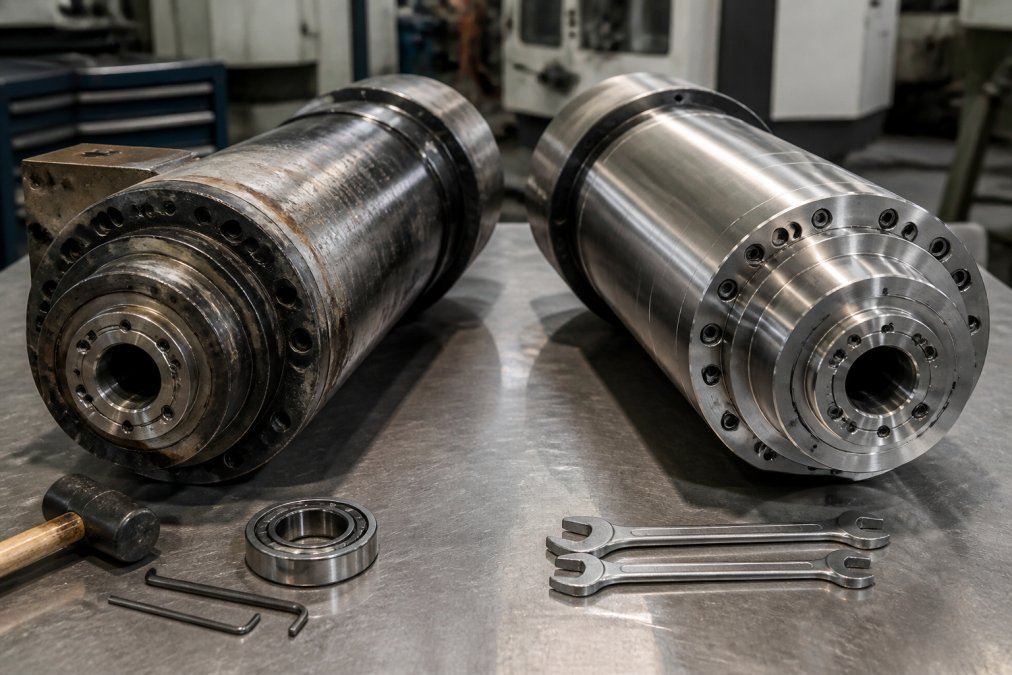
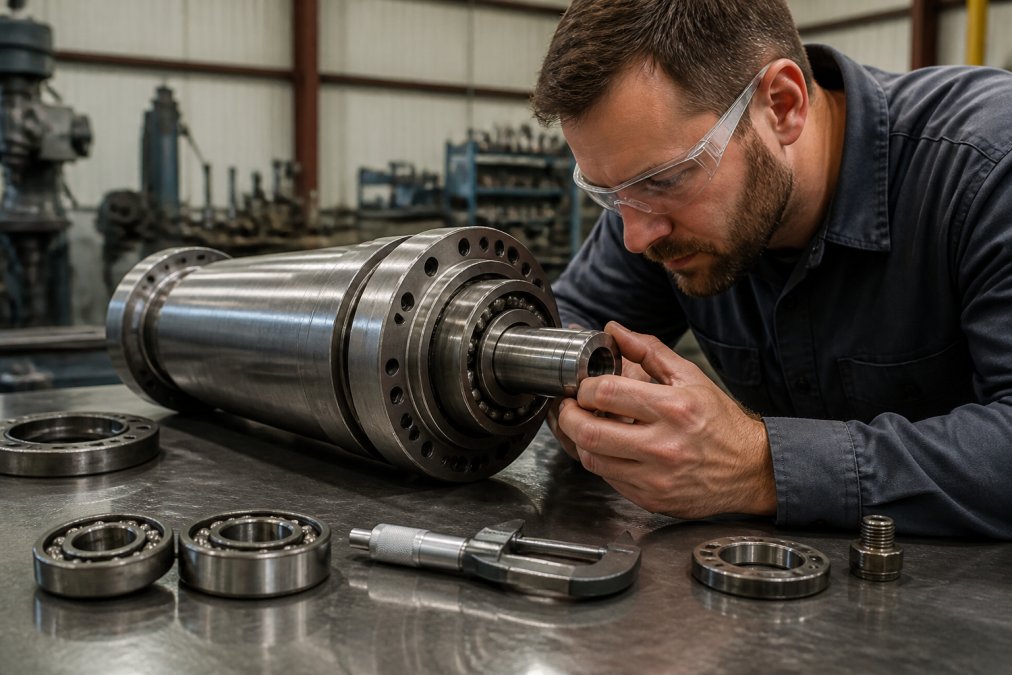
A spindle rebuild involves complete disassembly of the spindle cartridge, dimensional inspection of the housing and shaft, precision bearing replacement to manufacturer specifications, dynamic balancing after assembly, and runout and thermal testing before the unit is returned to service.
What separates a quality rebuild from a quick fix is the bearing selection. Precision grinding spindles and high-speed machining centers require matched bearing sets with specific preload characteristics. Using off-spec bearings to save cost is the most common cause of repeat failures within 6-12 months of a rebuild.
What Replacement Actually Costs (OEM vs Third-Party Units)
OEM replacement spindles carry a significant cost premium over third-party units, and lead times for OEM components on older or less common machines can stretch into weeks. The real cost of replacement goes beyond the unit price: installation labor, alignment and calibration time, and extended downtime while waiting for shipment all factor in.
Contact Machine Tool Science for a current quote on spindle services; pricing depends on spindle type, failure mode, and required turnaround.
Signs of CNC Spindle Failure You Should Not Ignore
CNC spindle failure rarely happens without warning. The most reliable early indicators are changes in surface finish quality and unexpected tool wear patterns. When a spindle's bearing condition degrades, runout increases, translating directly to chatter marks on machined surfaces and accelerated tool wear.
Other signs that warrant immediate spindle diagnostics:
- Audible bearing noise, grinding, whining, or intermittent clicking at speed
- Elevated spindle housing temperature during normal operation
- Vibration analysis readings that have shifted from baseline
- Loss of drawbar force, causing tool pull-out under cutting load
- Thermal growth behavior that has changed from historical patterns
- CNC control alarms related to spindle load or orientation
A common mistake is continuing to run a machine after the first surface finish deviation appears. Every hour of operation on a failing bearing accelerates component fatigue in the spindle housing and shaft, damage that can push a straightforward bearing replacement into a full spindle cartridge replacement.
As noted in [ANSI/ASME standards for machine tool(https://www.machinetoolscience.com/pages/contact-us) performance evaluation | asme.org], spindle error motion measurement is the most reliable method for detecting degradation before catastrophic failure.
CNC Spindle Repair Cost Factors That Move the Final Number
Several variables determine where a CNC spindle repair cost lands on the final invoice.
Failure mode and extent of damage is the primary cost driver. A bearing replacement on a spindle with an intact housing and undamaged shaft is the lowest-cost scenario. Add shaft scoring, housing bore wear, or motor winding damage and the cost climbs with each additional component.
Spindle type and speed rating affects both parts cost and labor time. High-speed motorized spindles used in aerospace and die-mold applications require tighter tolerances and more expensive bearing sets than a standard belt-drive spindle.
Parts availability affects lead time and cost. Spindles on older machines or discontinued models may require sourcing bearings from specialty suppliers. Shops that maintain inventory of common spindle components can compress that timeline significantly.
Turnaround tier directly affects labor cost. Emergency same-day or next-day service carries a premium over standard shop scheduling. That premium is often worth it when the machine is a production bottleneck.
Machine Tool Science performs comprehensive diagnostic fault isolation before quoting, so the estimate you receive reflects actual findings, not a worst-case assumption padded for margin.
Average Spindle Rebuild Turnaround Time and Its Impact on Downtime
Average spindle rebuild turnaround time varies from 3 to 10 business days for standard rebuilds, with emergency service options compressing that window to 1-2 days at a cost premium. The right turnaround tier depends entirely on the production impact of the affected machine.
A machine running 20 hours per day at measurable output loses real production value for every day it sits. When you factor that lost output against the premium for expedited service, the math often favors paying for faster turnaround, particularly for machines on the critical path.
A rebuild provider with field service capability can eliminate the shipping leg entirely, which is often the longest single variable in the timeline. The mean time between failures after a quality rebuild should restore the spindle's original service interval. A rebuild that cuts corners on bearing quality or skips dynamic balancing will fail sooner, compressing the rebuild cycle and increasing total maintenance cost over the machine's life.
Decision Matrix: Choosing Spindle Rebuild or Replacement by Failure Type
The rebuild-vs-replacement decision is most defensible when it's tied to the specific failure mode rather than a general cost comparison.

| Failure Type | Rebuild Viable? | Recommended Path | Key Consideration |
|---|---|---|---|
| Bearing wear, housing intact | Yes | Rebuild | Most cost-effective scenario |
| Shaft scoring, minor | Yes with shaft repair | Rebuild + shaft reconditioning | Verify shaft geometry post-repair |
| Housing bore out of tolerance | Conditional | Evaluate replacement | Housing repair adds significant cost |
| Motor winding failure | Yes | Rebuild with rewind | Rewind cost vs. new unit price |
| Taper condition degraded | Yes | Rebuild + taper regrind | Critical for tool retention accuracy |
| Spindle cartridge cracked | No | Replacement | Structural integrity compromised |
| Multiple simultaneous failures | Conditional | Full cost-benefit analysis | Rebuild cost may approach replacement |
| Obsolete model, no OEM parts | Yes | Rebuild preferred | Replacement unit may not exist |
When Rebuilding Is the Right Call
Rebuilding makes the most sense when the spindle housing and shaft are dimensionally intact, the machine itself has remaining service life, and the failure is isolated to bearings or a single wear component. It's also the right call when the machine model is older and OEM replacement spindles are either unavailable or carry extreme lead times.
Shops running multiple identical machines benefit from maintaining a rebuilt spare spindle. The rebuild cost is lower than a new unit, and having a ready spare eliminates downtime entirely when the next failure occurs.
When Replacement Makes More Sense
Replacement becomes the better option when the spindle housing bore is worn beyond the tolerance band for bearing fit, when the shaft has damage that cannot be corrected without compromising the original geometry, or when the machine is being upgraded and the spindle speed or taper specification needs to change.
It also makes sense when the cumulative rebuild history shows shortened service intervals, a sign that component fatigue has progressed beyond what bearing replacement can address.
Total Cost of Ownership: Beyond the Repair Invoice
Total cost of ownership for a CNC spindle decision encompasses the repair or replacement cost, the downtime cost during service, the expected service interval before the next intervention, and the residual value impact on the machine itself.
TCO Comparison Framework
| Factor | Spindle Rebuild | Spindle Replacement |
|---|---|---|
| Upfront cost | Lower | Higher |
| Lead time / downtime | Shorter (field service) | Longer (shipping + install) |
| Expected service interval | Equal if done correctly | Equal to OEM spec |
| Risk of repeat failure | Low with quality rebuild | Low with new unit |
| Capital expenditure impact | Operational expense | Capital expenditure |
| Availability for older machines | High | Low for discontinued models |
The operational vs. capital expenditure distinction matters for budget planning. A rebuild is typically classified as an operational expenditure, which clears faster in most approval workflows than a capital expenditure for a replacement unit.
Sustainability and the Environmental Cost of Replacement
Replacing a spindle generates material waste. A rebuild recovers the spindle housing, shaft, and other precision-machined components that represent significant embedded energy and material cost. As noted in EPA guidance on industrial waste reduction and sustainable manufacturing practices, reconditioning and remanufacturing industrial components is one of the highest-value waste reduction strategies available to manufacturers.
Warranty and Insurance Claim Considerations
Spindle failures that result from a documented event may be covered under machine insurance or an extended warranty. Most insurance claims require documentation of the failure event, a diagnostic report from a qualified technician, and a repair estimate before authorization. OEM warranty coverage typically specifies OEM-authorized service for the repair to remain valid. Verify your warranty terms before committing to a third-party rebuild if the machine is still within its warranty period.
How Spindle Rebuild Performance Compares to Factory Specifications
A properly executed spindle rebuild should restore the spindle to factory specifications. The key performance parameters are runout at the spindle nose, dynamic balance grade, drawbar force, and thermal growth behavior under load.
Runout is the most directly measurable indicator of rebuild quality. According to Lion Precision's technical resources on spindle error measurement, synchronous and asynchronous error motion measurements taken before and after a rebuild provide objective verification that the rebuilt spindle meets the original machine tool specification.
Dynamic balancing to ISO G1.0 or better is standard for high-speed spindles. Skipping this step will produce vibration at operating speed that shortens bearing life and degrades surface finish. Thermal growth behavior should return to the machine's original baseline after a quality rebuild. If thermal growth has shifted significantly post-rebuild, it typically indicates that bearing preload is incorrect.
A provider that returns a spindle with documented runout certification and dynamic balance data is giving you a baseline for future condition monitoring. A provider that returns it with a verbal assurance is giving you nothing to compare against when the next question about spindle condition arises.
Choosing between a spindle rebuild and replacement under time pressure, without a clear diagnostic picture, is where most shops make expensive mistakes. Machine Tool Science's factory-trained technicians perform complete diagnostic fault isolation before quoting, so you know exactly what you're authorizing before work begins. Our field service coverage across six states means we can often eliminate the shipping leg entirely, compressing turnaround time and getting your machine back in production faster. Get started with Machine Tool Science and make your next spindle decision on data, not guesswork.
Frequently Asked Questions
How much does a spindle rebuild cost compared to full replacement?
Spindle rebuild cost varies based on spindle type, damage severity, and required components such as bearings, motor windings, and drawbar assemblies. As a general industry reference, professional rebuilds often run significantly less than purchasing a new or OEM replacement unit. However, pricing depends on the specific machine, failure mode, and labor involved. Request a diagnostic quote before committing to either path, since an accurate teardown inspection is the only reliable basis for a cost-benefit analysis.
What factors contribute most to the total cost of a spindle rebuild?
The largest CNC spindle repair cost factors are bearing replacement grade and quantity, motor winding condition, taper condition, spindle housing damage, and whether dynamic balancing and runout certification are required. Secondary costs include lead time for specialty components, field service travel, and the rebuild tier you choose. Spindles with secondary damage from a crash or contaminated lubrication system consistently cost more to restore than those caught early through preventative maintenance or vibration analysis.
How do you determine if a CNC spindle is beyond repair?
A spindle is typically beyond economical repair when the spindle housing is cracked or out of tolerance, the motor stator has catastrophic winding failure, or component fatigue has compromised the core structure. A proper spindle diagnostics process, including runout measurement, thermal growth testing, and vibration analysis, identifies these conditions before work begins. Reputable service providers complete fault isolation and provide a written estimate before any disassembly charges accumulate.
What is the average spindle rebuild turnaround time?
Average spindle rebuild turnaround time ranges from a few days for standard bearing replacement on common production-class machines to several weeks for high-speed motorized spindles requiring specialty components or motor rewinding. Expedited service tiers reduce lead time but increase cost. The fastest path to minimizing production downtime is early diagnosis: shops that schedule rebuilds during planned maintenance windows avoid the longer queues and premium rates associated with emergency spindle repair.
Does a spindle rebuild come with a warranty comparable to a new unit?
Most professional spindle rebuild services include a limited warranty covering the rebuild work and replaced components, though the duration and scope vary by provider. A factory-new or OEM replacement spindle typically carries a longer manufacturer warranty. When evaluating the two options, factor in not just warranty length but what the warranty actually covers, whether the provider performs root cause analysis to prevent repeat failures, and how quickly warranty service is dispatched if an issue arises after the rebuild.
This article was written using GrandRanker