 comparison
Southland Machine Alternatives for Manufacturers
Table of Contents
- Why Manufacturers Switch Machine Tool Providers
- Machine Tool Repair Services: What to Expect
- Top Alternatives to Southland Machine
- Preventative Maintenance for CNC Machines: A Differentiator
- Authorized Machine Tool Dealer Benefits
- Total Cost of Ownership: Beyond Hourly Rates
- Making Your Switch Decision
- Frequently Asked Questions
Why Manufacturers Switch Machine Tool Providers
Switching machine tool service providers isn't a decision most manufacturers make lightly. You've built relationships, learned how one vendor operates, and integrated their support into your maintenance schedule. But the moment a repair takes three weeks instead of three days, or you're handed a bill with charges you didn't authorize, the calculus changes.
The real reason manufacturers explore alternatives to their current provider comes down to one thing: operational reliability. When your CNC machines sit idle because a service technician is delayed, your production schedule collapses. When diagnostic work leads to parts replacement instead of root-cause analysis, your costs spiral. When you can't get a straight answer about what a repair will cost before work begins, trust erodes.
Machine Tool Science understands this dynamic because we've worked with manufacturers across the Southeast who made the switch for exactly these reasons. They weren't looking to abandon their existing relationships, they were looking for transparency, speed, and expertise they could depend on.
Machine Tool Repair Services: What to Expect
Machine tool repair services come in two flavors: reactive emergency response and proactive preventative maintenance. Understanding the difference shapes how you evaluate alternatives.
Reactive repair is what happens when something breaks. A spindle seizes. A servo motor fails. A control system crashes. You call for help, a technician arrives, diagnoses the problem, orders parts if needed, and gets you back online. The speed of this response directly impacts your downtime cost. A one-hour response time versus a 24-hour response time can mean the difference between a minor production delay and a lost customer order.
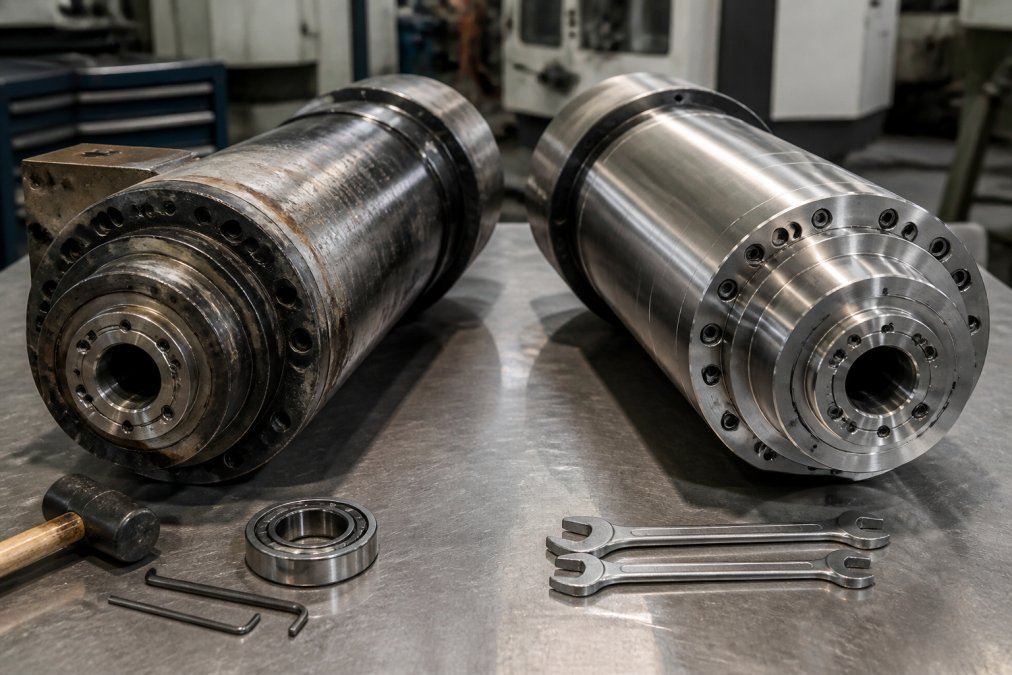
Proactive maintenance is the opposite approach. Instead of waiting for failure, you schedule regular inspections, spindle rebuilds, control system updates, and performance optimization. This is where the real cost savings happen. A spindle rebuild on your schedule costs significantly less than an emergency spindle failure that shuts down your shop.
The best machine tool repair providers excel at both. They respond to emergencies fast, but they also push you toward preventative maintenance because they understand that keeping your equipment running is better business than fixing broken equipment. This creates a natural alignment: their revenue comes from keeping you operational, not from emergency callouts.
When evaluating repair services, ask three questions: How fast can they respond to emergencies? What's their approach to preventative maintenance? And do they diagnose root causes before quoting repairs, or do they just replace parts and bill you later?
Top Alternatives to Southland Machine
Machine Tool Science stands at the top of this list because we've built our entire operation around the problems manufacturers face when they work with less transparent providers. Our factory-trained technicians perform comprehensive diagnostic fault isolation before quoting any repair. You get a clear answer about what's wrong, what it will cost, and how long it will take, before we touch your equipment.
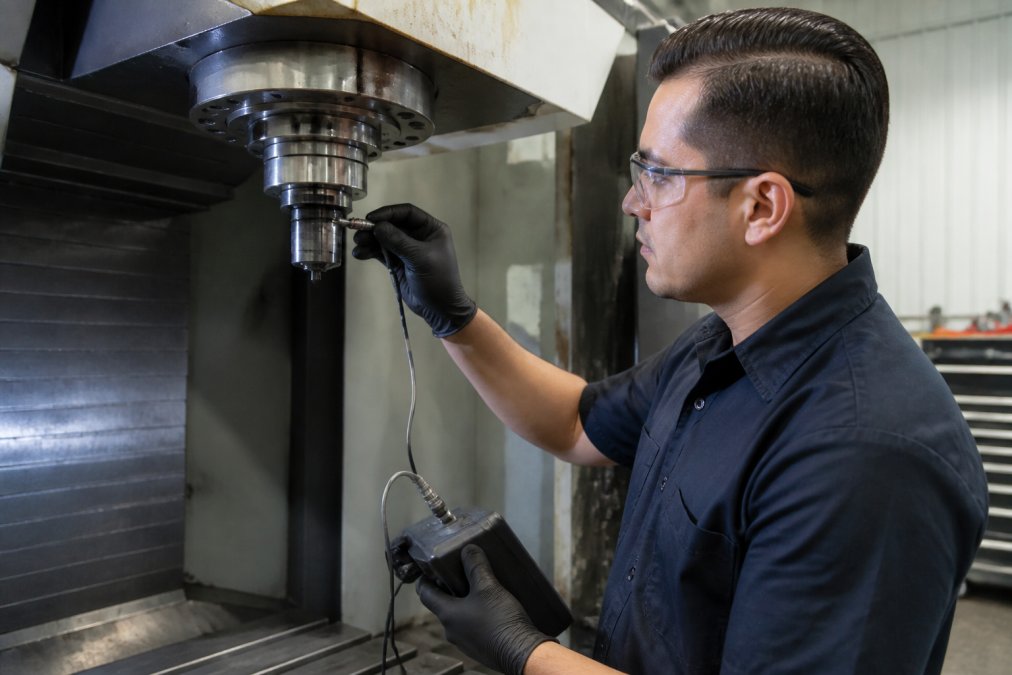
We're an authorized Priminer dealer, which means we don't just repair equipment, we sell and install new machining centers tailored to your production needs. Our service coverage spans six states across the Southeast, and our commitment to transparent rates with no surprise billing removes the friction from the vendor relationship. When you work with Machine Tool Science, you know exactly where you stand.
Anderson America: Fanuc Specialization and 24/7 Support
Anderson America brings over 50 years of CNC service experience and a laser focus on Fanuc technology (andersonamerica.com). If your shop runs primarily Fanuc systems, their factory-trained technicians understand the architecture deeply. They offer 24/7 remote and on-site support, which means you can get immediate assistance even outside business hours.
Their strength lies in advanced diagnostics. They've built an AI Technical Assistant and searchable knowledge base that helps technicians solve problems faster. For shops that value remote support, where a technician can diagnose and guide you through fixes without traveling, this is a significant advantage.
The trade-off: their pricing isn't publicly disclosed, and their Fanuc specialization, while deep, narrows their scope if you run mixed equipment. If your shop uses Fanuc exclusively and you value around-the-clock support, Anderson America is worth serious consideration.
Ellison Technologies: Rapid Response and Spindle Rebuilds
Ellison Technologies operates 16 locations across the United States, which translates to localized support in most regions (ellisontechnologies.com). They've built their reputation on a one-hour response guarantee for urgent repairs, a commitment that matters when production is stopped.
Their spindle rebuild service includes a one-year warranty and customized service packages. This is the kind of specialized capability that separates vendors. Not every repair shop invests in spindle rebuilding equipment and expertise. Ellison has, which means you don't have to source that service elsewhere or wait for a spindle replacement to arrive.
They support DN Solutions machines primarily, but also work with Tornos, Okamoto, and Mazak equipment. This broader equipment compatibility gives you flexibility if you run mixed machinery. The limitation is that their rapid-response model works best if you're located near one of their 16 facilities.
Productivity Inc.: High First-Call Completion Rate
Productivity Inc. operates in the Upper Midwest and Rocky Mountain regions and has built their service model around a simple metric: first-call completion. They maintain stocked vans and local inventory, which means their technicians arrive with parts and tools ready to solve problems on the first visit. Their first-call completion rate exceeds 90 percent, a number that directly translates to your uptime.
This is operational efficiency at work. Every return visit costs you time and money. Productivity Inc. has invested in inventory and logistics to minimize those returns. If you're located in their service territory and you value getting fixed the first time, this approach pays dividends.
Their weakness: geographic limitation. If you're outside the Upper Midwest and Rocky Mountain regions, they're not an option. But within their territory, they're a strong alternative for shops that prioritize uptime and predictable service.
Hanco, Ltd.: Industrial Machinery Beyond CNC
Hanco, Ltd. takes a broader approach to industrial machinery repair. They handle CNC machines, but they also specialize in gearbox repair, crane repair, and industrial hose supply. They're OSHA and MSHA certified, which signals compliance and safety expertise (osha.gov).
Their 24/7 availability and on-site capabilities mean they can respond to emergencies any time. For manufacturers who need more than just CNC support, who need comprehensive industrial machinery coverage, Hanco consolidates multiple vendors into one relationship.
The trade-off: their broader focus means they're not as specialized in CNC as Anderson America or Ellison. If your primary need is CNC machine repair, a specialist typically outperforms a generalist. But if you need industrial machinery support across multiple equipment types, Hanco's integrated approach simplifies your vendor management.
Preventative Maintenance for CNC Machines: A Differentiator
Preventative maintenance separates vendors who understand manufacturing from those who just fix broken machines. Here's why it matters: a spindle bearing that fails catastrophically costs thousands in parts, labor, and downtime. A spindle bearing that's monitored, serviced on schedule, and rebuilt before failure costs a fraction of that.
The best machine tool providers make preventative maintenance easy. They schedule regular inspections, track equipment history, and recommend maintenance windows that fit your production calendar. They also educate your operators and maintenance staff about early warning signs, unusual noise, temperature changes, vibration patterns, that signal problems before they become emergencies.
Machine Tool Science builds preventative maintenance into every customer relationship. We track your equipment performance, recommend service intervals based on usage patterns, and handle spindle rebuilds, control system updates, and performance optimization on your schedule. This proactive approach minimizes the emergency calls and keeps your costs predictable.
When evaluating vendors, ask about their preventative maintenance philosophy. Do they push you toward scheduled service, or do they wait for emergencies? Do they provide equipment history and performance data? Do they educate your team about maintenance best practices? The answers reveal whether a vendor sees you as a long-term partner or a source of emergency repair revenue.
Authorized Machine Tool Dealer Benefits
Being an authorized dealer for a major equipment manufacturer carries real advantages. It means you've met the manufacturer's quality standards, you've invested in factory training, and you have direct relationships with the manufacturer's technical support team.
When you buy equipment from an authorized dealer, you get more than a machine. You get a vendor who understands that equipment inside and out, who can source genuine parts quickly, and who can escalate technical problems directly to the manufacturer when needed. You also get clarity on warranty coverage and support, the manufacturer backs the equipment, and the authorized dealer backs the installation and integration.
Machine Tool Science's authorization as a Priminer dealer means we can deliver new machining centers that are precisely configured for your production needs, install them correctly, and support them with expertise that extends beyond the first year. This integration of sales, installation, and service support eliminates the friction of working with separate vendors for each function.
Total Cost of Ownership: Beyond Hourly Rates
Comparing machine tool service providers on hourly rates alone is like comparing cars on gas mileage. It's one factor, but it misses the bigger picture.
Total cost of ownership includes several components: hourly labor rates, response time (which affects downtime cost), first-call completion rates (which affect repeat visit costs), preventative maintenance (which affects emergency repair frequency), and parts pricing. A vendor with slightly higher hourly rates but faster response times and higher first-call completion rates typically costs less overall than a cheaper vendor who responds slowly and requires multiple visits.
Consider this scenario: Vendor A charges $150 per hour with a 24-hour response time. Vendor B charges $175 per hour with a one-hour response time. If your production line loses $2,000 per hour of downtime, Vendor B's faster response saves you $23,000 in the first incident alone, far more than the difference in hourly rates.
The same logic applies to first-call completion. If Vendor A solves the problem on the first visit 70 percent of the time and Vendor B solves it on the first visit 90 percent of the time, Vendor B's higher completion rate compounds into significant savings over a year of service.
When evaluating total cost of ownership, build a model based on your actual downtime costs, your equipment's failure patterns, and your production schedule. Plug in each vendor's response times, completion rates, and hourly rates. The math will reveal which vendor actually costs less, and it's rarely the one with the lowest hourly rate.
Making Your Switch Decision
Switching service providers requires careful planning. You're not just changing vendors, you're integrating a new team into your operations, transferring equipment history, and establishing new communication protocols.
Start by documenting your current pain points. Is it response time? Transparency in billing? Quality of diagnostics? Equipment downtime frequency? Preventative maintenance support? Be specific. "We're unhappy with our current vendor" is too vague. "We wait 48 hours for emergency response and we've experienced three unexpected repair charges over the past year" tells you exactly what to prioritize in a new vendor.
Next, audit your equipment. What machines do you run? What's their age and condition? What's your typical failure pattern? This information helps you evaluate which vendor is best suited to your specific situation. A vendor who specializes in your equipment type is worth more than a generalist.
Request references from each vendor, specifically, references from shops similar to yours in size and equipment mix. Ask those references about response times, quality of work, and whether they've experienced surprise billing. Ask about preventative maintenance programs and whether the vendor pushed them toward proactive service.
Finally, request a formal proposal from your top candidates. Include emergency response time, preventative maintenance programs, parts pricing, warranty coverage, and billing transparency. Compare these proposals side by side. The vendor who gives you the clearest picture of what you'll actually pay and what you'll actually get is already ahead in the trust department.
Machine Tool Science has helped manufacturers across the Southeast make this transition smoothly. We handle the technical transfer, we document your equipment history, and we establish preventative maintenance schedules that fit your production calendar. Our factory-trained technicians understand that switching vendors is a risk, which is why we make our first priority earning your confidence through transparent, reliable service.
Switching machine tool service providers is a significant operational decision, but it's the right move when your current vendor isn't delivering the reliability and transparency you need. Machine Tool Science combines emergency response capability, factory-trained technicians, and transparent billing practices to eliminate the downtime and unexpected costs that plague manufacturer-vendor relationships. With comprehensive diagnostic fault isolation, preventative maintenance programs, and authorization as a Priminer dealer, we deliver the equipment and support your shop needs to stay productive. Contact Machine Tool Science for a consultation about your specific needs, and let's discuss how we can improve your operational reliability.
Frequently Asked Questions
Q: What should I look for when choosing a machine tool repair service?
A: Prioritize factory-trained technicians, transparent diagnostic practices, and emergency response capability. Verify they perform root-cause analysis before quoting repairs, and offer clear pricing without surprise charges. For manufacturers relying on precision equipment, ask about their first-call completion rate and whether they service your specific machine brands. Response time matters: one-hour guarantees or 24/7 availability reduce production losses.
Q: How do machine tool repair services differ from authorized equipment dealers?
A: Repair-only shops focus on fixing existing equipment and preventative maintenance. Authorized dealers combine repair services with new equipment sales and often provide warranty support directly from the manufacturer. An authorized machine tool dealer benefits include access to factory-trained support, genuine parts, turnkey installation for new machines, and integrated service relationships that simplify procurement. Dealers typically stock more inventory and offer customized solutions aligned with your production roadmap.
Q: When should I consider switching my machine tool service provider?
A: Switch if your current provider has slow response times, frequently misdiagnoses problems requiring multiple service calls, lacks transparency in billing, or cannot support your equipment's control systems. Also consider switching if you need new equipment and want integrated service from a dealer, or if your provider lacks the specialized expertise your machines require. Small shops often benefit from switching to providers that actively serve companies their size rather than focusing only on large automotive plants.
Q: What's the typical turnaround time for spindle rebuilds?
A: Spindle rebuild turnaround varies by provider and complexity, typically ranging from several days to two weeks depending on whether parts are in stock and the extent of damage. Some providers offer expedited service for critical production situations. Before committing, ask your prospective provider for their standard lead time, whether they guarantee a timeline, and what happens if additional issues are discovered during disassembly. Compare this against the cost and downtime of purchasing a replacement spindle outright.
Q: How does preventative maintenance reduce total cost of ownership for CNC machines?
A: Preventative maintenance catches wear before catastrophic failure, avoiding emergency repairs that cost more and cause longer downtime. Regular spindle conditioning, thermal compensation checks, and control system updates extend equipment life by years. Manufacturers that implement preventative schedules report fewer unplanned shutdowns, higher production capacity utilization, and lower parts costs overall. Customized maintenance plans aligned with your machine's duty cycle and production volume deliver the best ROI.