 how-to
Risks of Neglecting CNC Machine Maintenance
Table of Contents
- Why CNC Machine Maintenance Matters: The Cost of Inaction
- How Machine Downtime Translates to Production Loss and Revenue Impact
- Common CNC Machine Malfunctions Caused by Neglected Maintenance
- The Failure Chain: How Neglected Tasks Lead to Equipment Destruction
- Safety and Environmental Consequences of Poor CNC Machine Maintenance
- Establishing a CNC Preventive Maintenance Checklist and Schedule
- Building Your CNC Maintenance Schedule by Machine Type and Operating Conditions
- Frequently Asked Questions
Last Updated: October 14, 2026
Why CNC Machine Maintenance Matters: The Cost of Inaction
Neglecting CNC machine maintenance is like ignoring a small leak in your roof. At first, nothing happens. Then one day, the entire structure fails. The cost of fixing it dwarfs what you would have spent on prevention.
CNC machine maintenance is the backbone of reliable manufacturing. When you skip it, you're not just risking downtime, you're gambling with your production schedule, your reputation, and your bottom line. When shops delay maintenance, the results are often the same: catastrophic failure, emergency repairs, and lost revenue that could have been prevented.
The real problem is that maintenance feels optional until it isn't. You can run a CNC machine hard for weeks without obvious signs of trouble. The spindle still spins. The cuts still happen. But underneath, wear accumulates. Coolant degrades. Bearings lose their precision. One morning, you arrive to find your machine won't start, or worse, it's producing parts that don't meet spec.
That's when maintenance becomes urgent. And urgent always costs more than planned.
How Machine Downtime Translates to Production Loss and Revenue Impact
Machine downtime hits your business in three ways: lost production, delayed shipments, and emergency repair costs.
When a CNC machine stops, every minute counts. If you're running a job for a customer with a tight deadline, downtime doesn't just delay that one job, it cascades through your entire schedule. Other jobs get pushed back. Customers get frustrated.
The financial impact is brutal. A single day of unplanned downtime can cost thousands in lost production.
Here's what makes it worse: unexpected breakdowns often happen at the worst possible time. Friday afternoon before a holiday weekend. During your biggest production run of the year. When your primary technician is on vacation. The machine fails when you can least afford it.
Preventive maintenance eliminates this chaos. Scheduled maintenance happens on your terms, not the machine's. You plan for it. You budget for it. You control when it happens. The machine stays reliable, your schedule stays predictable, and your customers stay happy.
Common CNC Machine Malfunctions Caused by Neglected Maintenance
Neglected maintenance doesn't cause random failures. It causes predictable ones. The same problems show up again and again in shops that skip their maintenance schedules.
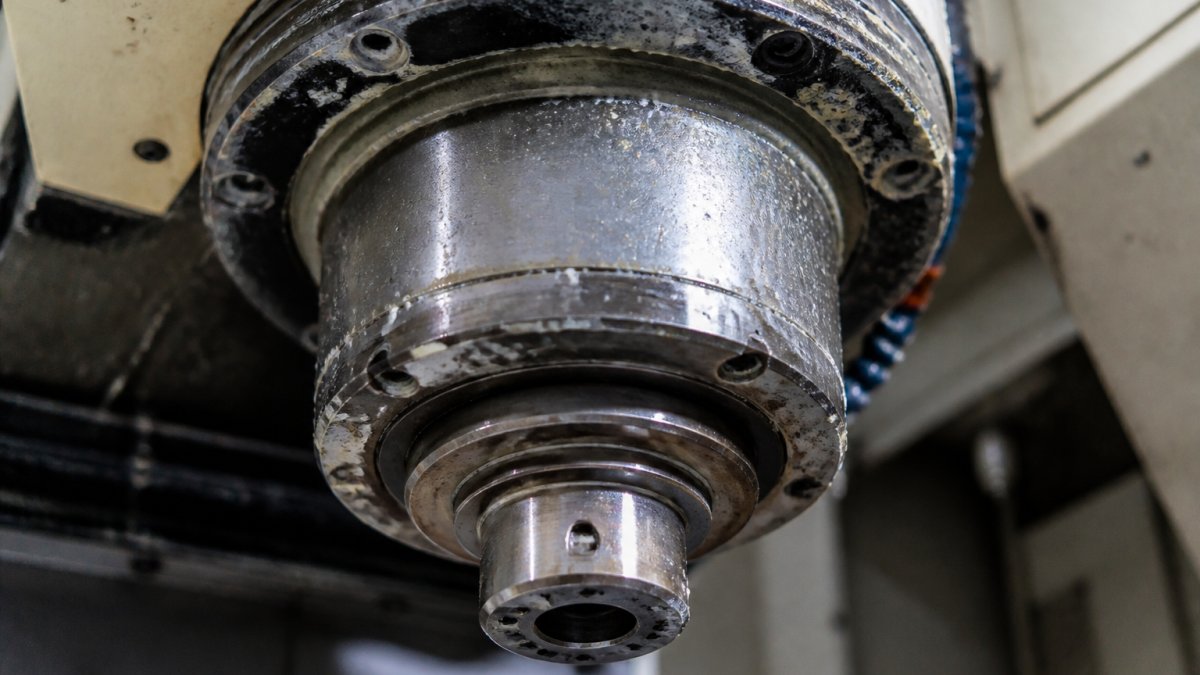
Spindle and Bearing Failure
The spindle is the heart of your CNC machine. It rotates at thousands of RPM and demands constant care. When you neglect spindle maintenance, bearings wear out fast.
Bearings need proper lubrication to function. Over-greasing clogs them. Under-greasing causes friction and heat buildup. Either way, the bearing fails. When a bearing fails, the spindle wobbles. Cuts become inaccurate. Eventually, the spindle seizes entirely and the machine stops.
Spindle failure is expensive. Rebuilding a spindle takes time and money. Replacing one costs even more. Both options mean the machine is down for days or weeks. That's production you lose, work you can't complete, and customers you disappoint.
The fix is simple: follow the manufacturer's lubrication schedule. Check spindle bearings regularly. Listen for unusual noise or vibration. Address problems early, before they cascade into catastrophic failure.
Accuracy Loss and Inaccurate Cuts
CNC machines are built for precision. They hold tight tolerances and produce accurate parts consistently. But that precision depends on maintenance.
When you skip cleaning and inspection, dust and coolant buildup accumulate inside the machine. This buildup affects everything: spindle runout, axis alignment, workpiece clamping. The machine still runs, but the cuts aren't accurate anymore.
Inaccurate cuts mean scrapped parts. Scrap is lost material, lost labor, and lost time. It also damages your reputation if bad parts ship to a customer. One bad delivery can cost you a contract.
Maintaining machine calibration prevents this. Regular inspection catches misalignment early. Proper cleaning prevents buildup. The machine stays accurate, your parts stay good, and your reputation stays intact.
Overheating and Heat Buildup
CNC machines generate heat. The spindle spins fast. Friction builds. Coolant helps manage heat, but only if it's clean and flowing properly.
When coolant degrades or filters clog, heat accumulates. The spindle runs hotter. Bearings run hotter. Metal components expand. Tolerances tighten. The machine loses accuracy and reliability.
Worse, extreme heat can damage internal components permanently. A spindle that overheats once might never run the same again. The precision is gone. The machine is compromised.
Maintaining coolant and cleaning filters keeps heat under control. Check coolant condition regularly. Change filters on schedule. Keep the machine cool and it stays reliable.
The Failure Chain: How Neglected Tasks Lead to Equipment Destruction
Maintenance failures don't happen in isolation. They chain together. One neglected task leads to another problem, which leads to another, until the machine catastrophically fails.
Here's how it typically unfolds:
Stage 1: Filter Clogging You skip filter cleaning. Dust and coolant particles accumulate. The filter clogs. Coolant flow slows.
Stage 2: Heat Buildup Without proper coolant flow, heat builds in the spindle. Temperature rises. The machine runs hotter than it should.
Stage 3: Bearing Stress Heat accelerates bearing wear. Lubrication breaks down faster at high temperatures. Bearings start to fail.
Stage 4: Irregular Spindle Movement The failing bearing causes the spindle to wobble. Runout increases. The spindle no longer spins true.
Stage 5: Accuracy Loss Spindle wobble translates to inaccurate cuts. Parts don't meet spec. You scrap work or send bad parts to customers.
Stage 6: Catastrophic Failure The bearing finally fails completely. The spindle locks up. The machine stops. Now you need an emergency repair call, spindle rebuild, and days of downtime.
This entire chain was preventable. One filter cleaning at the right time stops the whole cascade.
The lesson is clear: maintenance tasks interconnect. Neglecting one creates conditions for others to fail. Stay on schedule, and you break the chain before it starts.
Safety and Environmental Consequences of Poor CNC Machine Maintenance
Neglected CNC machines don't just break down. They become safety hazards.
A machine with loose components can throw a tool or workpiece. A spindle that wobbles unpredictably creates vibration that can damage surrounding equipment or injure an operator. A machine with degraded coolant becomes a health risk, contaminated coolant can cause skin reactions or respiratory issues if mist is inhaled.
Environmental consequences matter too. Degraded coolant becomes harder to dispose of properly. Spills from leaking machines contaminate your shop floor. Machine failure can release fluids that require environmental cleanup.
Proper maintenance prevents these risks. Regular inspection catches loose components before they cause injury. Clean coolant and proper ventilation protect workers. A well-maintained machine is a safe machine.
Establishing a CNC Preventive Maintenance Checklist and Schedule
Preventive maintenance works because it's systematic. You follow a checklist. You do it on schedule. You document what you do. This consistency prevents surprises.
A good maintenance schedule has three levels: daily, periodic, and deep maintenance. Each level catches different problems.
Daily Inspection and Cleaning Tasks
Daily maintenance takes 15-30 minutes per machine. Do it at the start of the shift or end of the day.
Daily checklist:
- Visual inspection for leaks or obvious damage
- Check coolant level and condition
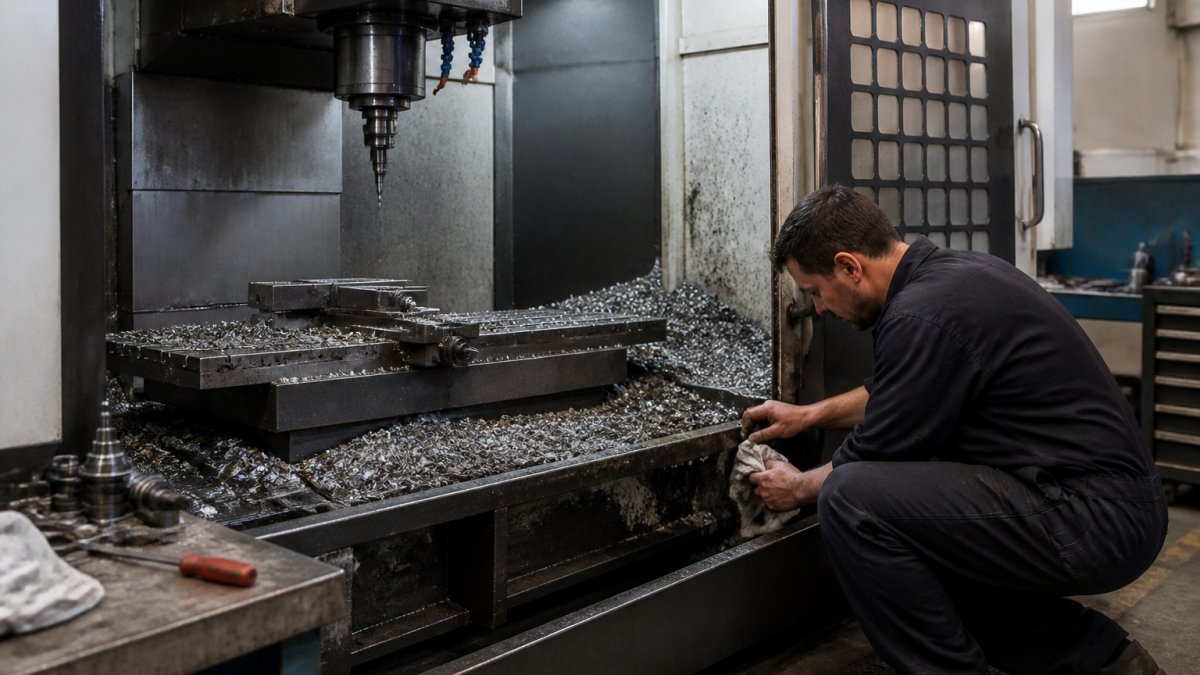
- Wipe down machine surfaces and remove dust
- Inspect for loose bolts or components
- Listen for unusual noise during spindle startup
- Check that all guards and covers are in place
- Verify emergency stop button works
These tasks catch problems early. A small leak becomes visible. Loose bolts get tightened before they cause failure. Unusual noise gets investigated before it becomes catastrophic.
Daily maintenance is cheap insurance. It takes minutes and prevents hours of downtime.
Weekly and Monthly Maintenance Activities
Weekly and monthly maintenance goes deeper. It takes 1-2 hours per machine.
Weekly tasks:
- Clean or replace air filters
- Inspect belts for wear or damage
- Check lubrication levels in all points
- Verify spindle runout with a dial indicator
- Clean coolant tank and remove settled debris
- Inspect tool holders for wear
Monthly tasks:
- Deep clean of machine interior
- Inspect bearings for play or noise
- Check electrical connections for corrosion
- Verify all axis movement is smooth
- Inspect coolant hoses for cracks or leaks
- Check feed rate and rapid rate performance
These tasks prevent the small problems from becoming big ones. A belt that's starting to fray gets replaced before it breaks. A bearing with slight play gets attention before it fails completely.
Quarterly and Annual Deep Maintenance
Quarterly and annual maintenance is comprehensive. It takes 4-8 hours per machine and often requires a trained technician.
Quarterly tasks:
- Complete spindle inspection and bearing check
- Thermal imaging to detect heat problems
- Comprehensive electrical system check
- Hydraulic system inspection if applicable
- Machine calibration verification
- Coolant analysis and possible replacement
Annual tasks:
- Full machine disassembly of critical components
- Bearing replacement if wear is detected
- Spindle rebuild or professional inspection
- Complete coolant system flush and refill
- Comprehensive machine recalibration
- Software and control system updates
Deep maintenance catches problems that daily and weekly tasks miss. It extends machine life and maintains precision over years of operation.
Building Your CNC Maintenance Schedule by Machine Type and Operating Conditions
Not all machines need the same maintenance schedule. Older machines need more attention. Machines running continuously need more frequent care.
Build your schedule around three factors: machine age, operating hours, and environment.
New machines (under 5 years): Follow the manufacturer's recommended schedule exactly. New machines are more forgiving, but maintenance is still critical.
Aging machines (5-15 years): Increase maintenance frequency by 25-50%. These machines have more wear. They need closer monitoring.
Old machines (over 15 years): Increase frequency by 50-100%. These machines are valuable if they're well-maintained, but they demand constant attention.
Operating conditions matter too:
- Continuous operation: Increase all maintenance frequencies by 25%. Machines running 24/7 wear faster.
- Dusty environment: Change filters twice as often. Dust clogs systems faster than clean air.
- High-precision work: Calibrate monthly instead of quarterly. Precision demands tighter tolerances.
- Heavy cutting: Inspect bearings and spindle more frequently. Heavy loads accelerate wear.
Your schedule should be written down. Document what you do, when you do it, and what you find.
Machine Tool Science can help you build a maintenance schedule tailored to your specific machines and operating conditions.
The choice between preventive maintenance and reactive repair is stark. Preventive maintenance costs time and money, but you control when it happens.
Neglecting CNC machine maintenance creates a cascade of failures that end in expensive downtime and equipment damage.
Start with daily inspection and cleaning. Add weekly and monthly tasks. Schedule quarterly and annual deep maintenance.
Frequently Asked Questions
What happens if you don't maintain a CNC machine?
Neglected CNC machine maintenance leads to spindle failure, bearing damage, loss of accuracy, and unexpected breakdowns that halt production. Over time, small issues compound into catastrophic equipment failure requiring expensive repairs or replacement. Dust buildup clogs filters, coolant breaks down, belts wear unevenly, and components loosen, each accelerating the next failure. The result is unplanned downtime that disrupts your production schedule and damages your ability to meet customer deadlines.
How does poor CNC machine maintenance affect accuracy?
Poor maintenance causes inaccurate cuts and dimensional drift through several mechanisms. Worn bearings and spindle imbalance introduce vibration, loose workpiece clamping reduces tool control, and machine calibration drifts without regular inspection. Dust and coolant contamination interfere with precision positioning. Over-greasing creates heat buildup that warps components, while under-lubricated parts generate friction that throws off feed rates and rapid rates. The longer maintenance is deferred, the wider the tolerance drift becomes, leading to scrap parts and rework costs.
What are the most common signs a CNC machine needs maintenance?
Watch for irregular spindle movement, unusual noise or vibration, rising temperature, clogged filters requiring frequent cleaning, and visible dust or coolant leaks. Inaccurate cuts, slower cycle times, and feed rate irregularities also signal underlying wear. Loose components, belt slippage, and difficulty achieving machine calibration are red flags. Early warning signs appear long before failure, responding to them prevents the failure chain that leads to complete breakdown and extended downtime.
How often should CNC machines receive preventive maintenance?
A comprehensive CNC preventive maintenance checklist should include daily cleaning and filter inspection, weekly lubrication and coolant checks, monthly bearing and belt inspection, and quarterly or semi-annual calibration and deep cleaning. Annual thermal imaging and full spindle inspection catch hidden wear before it causes failure. The exact CNC maintenance schedule depends on machine age, operating hours, production intensity, and coolant type. High-volume shops may need more frequent attention; lightly used machines may extend intervals slightly, but skipping scheduled maintenance always increases risk.