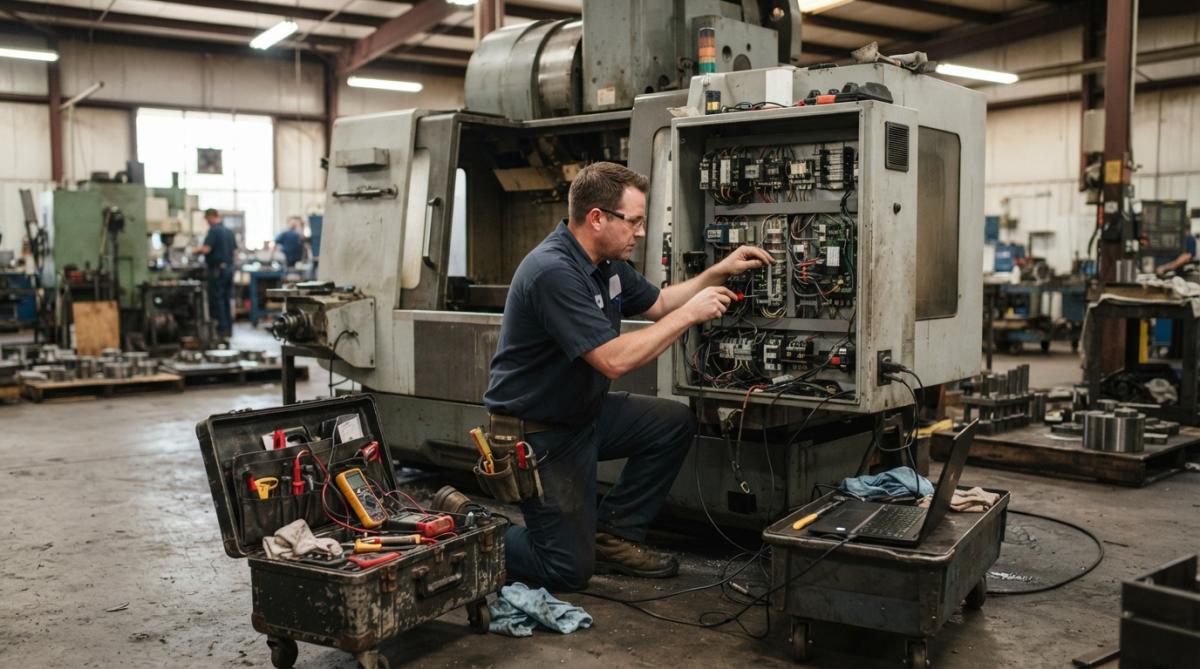
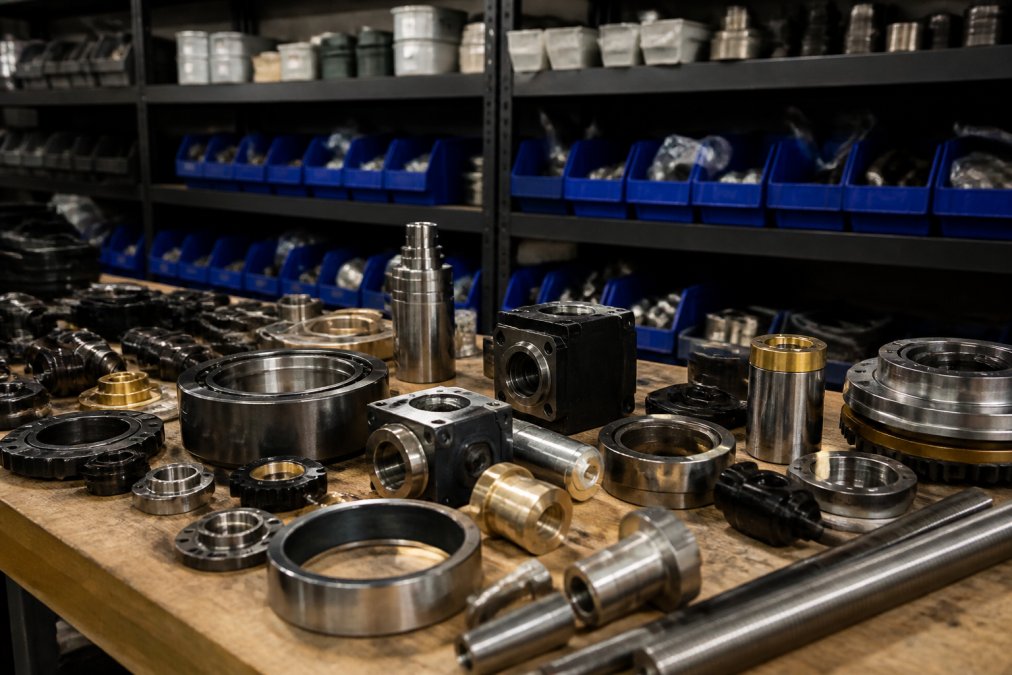
 ultimate-guide
Industrial Machine Repair Transparency Guide
Table of Contents
- Why Machine Repair Transparency Matters More Than Price
- Industrial Machine Repair Cost Breakdown: What You're Actually Paying For
- How to Audit a Repair Quote Before You Approve It
- Industrial Equipment Repair vs Replace Analysis: A Practical Framework
- CNC Machine Repair and Maintenance Services: Preventative vs. Reactive Approaches
- Vendor Vetting Framework: How to Choose a Repair Partner You Can Trust
- Legal and Warranty Implications of Third-Party Repairs
- Conclusion
Last Updated: August 27, 2026
Why Machine Repair Transparency Matters More Than Price
Most manufacturers compare repair quotes by price alone, then face the same failure weeks later. Machine repair transparency means providing complete, auditable documentation of diagnostics, labor, parts sourcing, and pricing before and after repair, separating genuine fixes from expensive parts swaps that delay inevitable breakdown.
At Machine Tool Science, we've built our service model around this principle because we are committed to diagnosing the root cause of your equipment issues to ensure your operations run efficiently and without surprise billing. According to U.S. Department of Energy Advanced Manufacturing Office guidance on maintenance practices, transitioning from reactive to preventive maintenance strategies can significantly reduce equipment-related costs and improve asset lifecycle management.
Price matters, but a low quote without root cause analysis will almost always cost more over the machine's life than a higher quote that does.
Industrial Machine Repair Cost Breakdown: What You're Actually Paying For
Understanding where your repair dollars go is the first step toward auditing fair value.
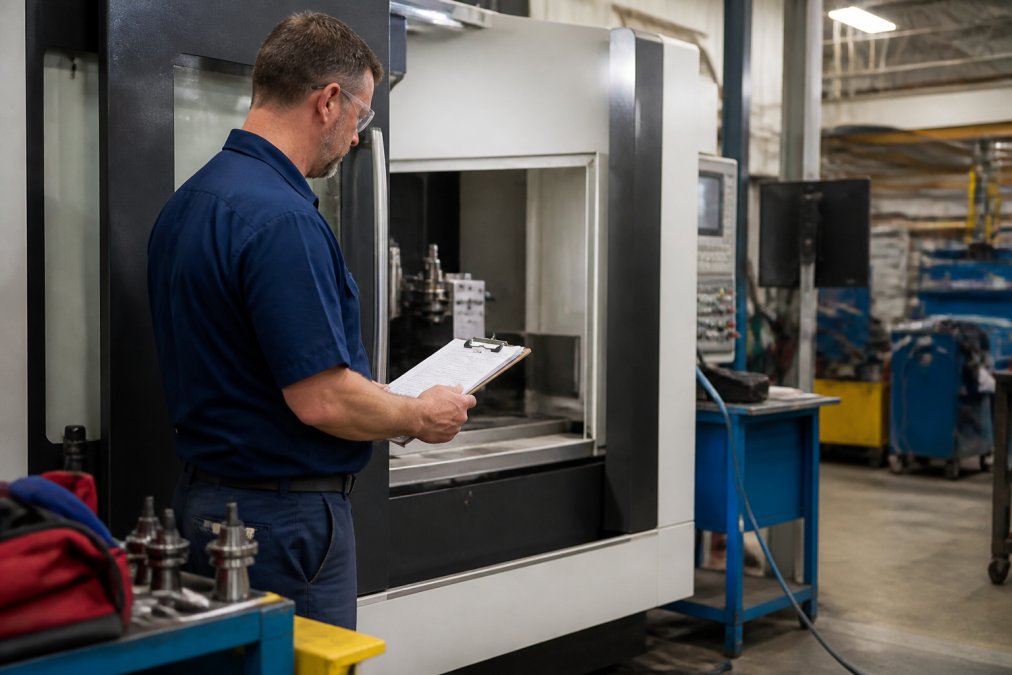
A typical repair invoice bundles several distinct cost categories that many shops present as a single line item. Breaking them apart gives you negotiating power and clarity on asset depreciation.
Diagnostic and Fault Isolation Fees
Diagnostic and fault isolation is the work performed before any parts are ordered or labor is committed. A reputable vendor charges for this separately and provides a written report of findings before you approve the repair.
This fee covers technician time, test equipment use, and reproducing the fault under controlled conditions. You should receive a written fault isolation report identifying the failure mode, probable root cause, and recommended corrective actions with cost-benefit analysis for each option. If a vendor can't produce this document, that's a significant red flag.
Labor, Parts, and Hidden Markup Risks
Labor is typically billed at an hourly rate varying by technician certification level and service type. CNC controls work, spindle rebuilds, and precision calibration command higher rates than mechanical adjustments. Ask for the rate card upfront.
Parts markup is where transparency breaks down most often. Some vendors source components at wholesale and bill at retail without disclosure. Others use non-OEM substitutes while billing at OEM prices. A transparent vendor itemizes each part with manufacturer part number, unit cost, and markup percentage.
Common hidden cost categories to watch for: disposal fees for hazardous materials, travel charges exceeding the quoted estimate, vague "shop supplies" line items, overtime surcharges applied without authorization, and re-inspection fees when a repair requires a second visit due to vendor workmanship.
How to Audit a Repair Quote Before You Approve It
A well-structured repair quote tells you almost everything about the vendor's professionalism before work begins. The audit process takes roughly 20 minutes and can save thousands of dollars on a single job.
| Quote Element | What to Look For | Red Flag |
|---|---|---|
| Scope of work | Specific fault description tied to diagnostics | Vague language like "general repair" |
| Labor hours | Estimated hours with rate per hour | Lump-sum labor with no hour breakdown |
| Parts list | Part numbers, OEM vs. aftermarket notation | "Misc. parts" with no itemization |
| Warranty terms | Duration and what is covered | No warranty mentioned |
| Travel charges | Flat rate or mileage formula stated | Estimated only, no cap |
| Payment terms | Net terms or milestone billing | Full payment required before work begins |
| Authorization trigger | Work begins only after written approval | "We'll start right away" |
Red Flags in Repair Quotes
The biggest red flag is a quote arriving before diagnostics are complete. Any vendor providing a firm repair price without isolating the fault is guessing, and you're paying for that guess. Other patterns warranting scrutiny: quotes arriving within minutes of a phone call, refusal to provide written scope before starting, pressure to approve "while the technician is on-site," and no mention of what happens if additional faults are discovered during repair.
Documentation You Should Receive After Every Repair
After every completed repair, request: a completed work order with technician name, certification level, and hours worked; parts replaced with OEM part numbers and serial numbers; test results confirming the machine meets original performance specifications; calibration records if any axes, probes, or spindle speeds were adjusted; photographs of the failed component and replacement; and a written statement of warranty coverage and claim procedure.
Industrial Equipment Repair vs Replace Analysis: A Practical Framework
The repair vs. replace decision is one of the most consequential calls a plant manager makes, yet most organizations make it reactively, under pressure, with incomplete data. A practical framework starts with total cost of ownership rather than purchase price.
| Factor | Repair Makes Sense | Replace Makes Sense |
|---|---|---|
| Machine age | Less than 60% of design life | Approaching or past design life |
| Repair cost vs. replacement cost | Below 40-50% of replacement value | Above 50% of replacement value |
| Failure frequency | First or second major failure | Repeated failures within 12 months |
| Parts availability | OEM parts readily available | Parts discontinued or long lead times |
| Capacity needs | Current capacity is adequate | Production demands have outgrown the machine |
| Technology gap | Controls and capabilities still competitive | Newer technology offers material productivity gains |
Mean time between failures is the metric that matters most. A machine failing every 18 months with major repairs is on a trajectory toward replacement regardless of any single repair's cost. According to SMRP (Society for Maintenance and Reliability Professionals) body of knowledge, asset lifecycle management decisions should account for both direct repair costs and indirect costs including production losses, quality impacts, and safety risks.
CNC Machine Repair and Maintenance Services: Preventative vs. Reactive Approaches
The most expensive maintenance strategy is waiting for a machine to break. For CNC machining centers, spindles, and precision fabrication equipment, reactive maintenance is almost always wrong due to complex failure modes, high repair costs, and severe production impact.
Scheduled Maintenance and Condition Monitoring
Preventative maintenance for CNC equipment operates on two levels: time-based and condition-based. Time-based maintenance follows OEM-recommended service intervals for lubrication, filter changes, coolant system service, and mechanical inspection. Condition monitoring tracks leading indicators of failure before they become faults through vibration analysis on spindles and ballscrews, thermal imaging of electrical cabinets, spindle load monitoring, and coolant analysis.
Scheduled maintenance also creates the maintenance log history that makes future repair vs. replace decisions defensible and gives your repair vendor context for diagnosing intermittent faults.
Emergency Breakdown Response and Spindle Rebuilds
Emergency breakdown response is where machine repair transparency matters most, because urgency creates pressure to skip audit steps. A spindle rebuild is one of the most technically demanding and costly repairs in a CNC environment. Before approving an emergency spindle rebuild, confirm the vendor has a documented spindle rebuild process with acceptance criteria, technicians hold relevant certifications or factory training, you will receive a post-rebuild test report with runout measurements and balance data, and the rebuilt spindle carries a written warranty with defined coverage terms.
Vendor Vetting Framework: How to Choose a Repair Partner You Can Trust
Choosing a repair vendor based on availability and price is how most manufacturers cycle through multiple providers without finding one they actually trust.

A structured vetting process removes guesswork. The vendor evaluation framework covers four areas: technical credentials, process transparency, supply chain reliability, and commercial accountability.
Technician Certification and Factory Training
Technician certification is the most verifiable indicator of technical competence. For CNC equipment, relevant credentials include factory training from the control manufacturer (Fanuc, Siemens, Mitsubishi), mechanical certifications relevant to equipment type, and documented experience on your specific machine models. Factory-trained technicians understand the engineering intent behind the machine's design, which matters for diagnosis. According to NIMS (National Institute for Metalworking Skills) certification standards, standardized credentialing for precision machining and CNC operation provides a verifiable benchmark for technical competency.
Vendor vetting checklist: provide technician certification documentation on request; disclose which technicians will be assigned to your account; offer factory training credentials for your specific equipment brands; carry appropriate liability insurance and provide certificates; provide references from customers with similar equipment types.
Supply Chain Impact on Repair Lead Times
Parts availability is the variable most affecting repair lead times, and it is the one vendors are least likely to discuss proactively. A transparent vendor tells you, before you approve a repair, where required parts are sourced, what the expected lead time is, and whether any substitutions may be necessary. A vendor with established distributor relationships and spare parts inventory is meaningfully better positioned than one who orders to demand.
Legal and Warranty Implications of Third-Party Repairs
Third-party repairs can void OEM warranties. The Magnuson-Moss Warranty Act guidance from the Federal Trade Commission generally prohibits manufacturers from voiding a warranty solely because a third party performed maintenance or repairs, provided those repairs were performed correctly and did not cause the issue covered by the warranty. However, practical application is more nuanced than the general principle.
Key considerations for warranty compliance: review your OEM warranty terms before authorizing any third-party repair on equipment still under warranty; require your repair vendor to document that work was performed to OEM specifications; retain all post-repair documentation in case a warranty dispute arises; understand the distinction between maintenance (generally protected under Magnuson-Moss) and modifications (generally not protected).
Third-party repairs also carry liability implications. If a repair is performed incorrectly and the machine subsequently causes a safety incident or produces nonconforming parts, the documentation trail determines accountability. Mechanical integrity documentation is not optional for regulated industries.
Unplanned downtime and surprise repair bills are the two most controllable costs in a manufacturing operation, yet most plants treat both as inevitable. They are not. Machine Tool Science provides comprehensive diagnostic fault isolation before quoting, factory-trained technicians who identify root causes rather than symptoms, and transparent billing with no surprise charges. Whether you need emergency CNC repair, a spindle rebuild, or a proactive maintenance program, get in touch with Machine Tool Science to discuss your equipment and get a clear scope of work before any repair begins.
Frequently Asked Questions
What should be included in an industrial machine repair quote?
A complete repair quote should itemize diagnostic and fault isolation fees separately from labor and parts. It should list each component by part number, show the labor rate and estimated hours, and state any conditions that could change the final price. Quotes that bundle everything into a single figure with no line items are a warning sign. You should also see a root cause analysis summary explaining why the failure occurred, not just what will be replaced.
How do you determine if industrial machinery should be repaired or replaced?
The standard approach compares the total repair cost against the asset's current market value and remaining useful life. A common rule of thumb is that repair costs exceeding 50% of replacement value warrant a serious replace analysis, but total cost of ownership matters more than the single repair figure. Factor in asset depreciation, mean time between failures history, spare parts availability, and whether the machine still meets your current production tolerances before making the call.
How does preventative maintenance impact long-term repair costs?
Scheduled preventative maintenance directly reduces emergency breakdown frequency and extends asset lifecycle. Machines on a documented maintenance schedule tend to show longer mean time between failures and lower annual repair spend than comparable machines running purely on a reactive basis. Maintenance logs also provide the condition monitoring data needed to catch wear patterns early, which typically means cheaper interventions before a full component failure occurs.
What documentation should I receive after a CNC machine repair?
After any CNC machine repair and maintenance service, you should receive a written root cause analysis, a parts list with serial or part numbers, calibration records if any axes or spindle work was performed, and a service report signed by the technician. For warranty compliance purposes, retain these records for the life of the machine. If your provider cannot supply this documentation, that gap creates risk if a warranty dispute arises later.
This article was written using GrandRanker