 ultimate-guide
CNC Machine Repair and Maintenance Services Guide
Table of Contents
- Why Professional CNC Machine Repair and Maintenance Services Matter
- CNC Preventive Maintenance Checklist: What a Service Contract Should Cover
- Understanding CNC Spindle Rebuild Cost vs. Replacement
- When You Need Emergency CNC Machine Repair: A Response Plan
- How to Choose a CNC Repair and Maintenance Provider
- The Cost-Benefit Case for Preventive and Predictive Maintenance
- Conclusion: Building a Maintenance Strategy That Protects Uptime
- Frequently Asked Questions
Last Updated: September 6, 2026
Why Professional CNC Machine Repair and Maintenance Services Matter
Every hour of unplanned machine downtime costs precision manufacturers far more than the repair invoice itself. When a spindle fails mid-production or a controller throws an unfamiliar alarm code, the ripple effects hit delivery schedules, labor use, and customer trust. Professional CNC machine repair and maintenance services exist to prevent those moments and shorten them when they occur.
At Machine Tool Science, we define CNC machine repair as the diagnostic and corrective work that restores a machine tool to its original specification, while maintenance is the scheduled discipline that keeps it there. Shops that treat repair as an emergency expense rather than a managed process consistently lose more production time.
Most facilities do not need more machinery; they need their existing spindles, drives, and controllers running at rated precision for longer intervals. That comes from pairing in-house daily care with professional service intervals.
Below, we walk through what a real maintenance contract should cover, how to evaluate a spindle rebuild versus replacement, and how to build an emergency response plan that protects your uptime.
CNC Preventive Maintenance Checklist: What a Service Contract Should Cover
A professional preventive maintenance program is the single most effective way to reduce machine downtime and the foundation of any sound service agreement. The best contracts systematically extend machine longevity by catching wear before it becomes catastrophic. But before you call a technician, there is a layer of first-aid your own team can perform that resolves a surprising number of issues.
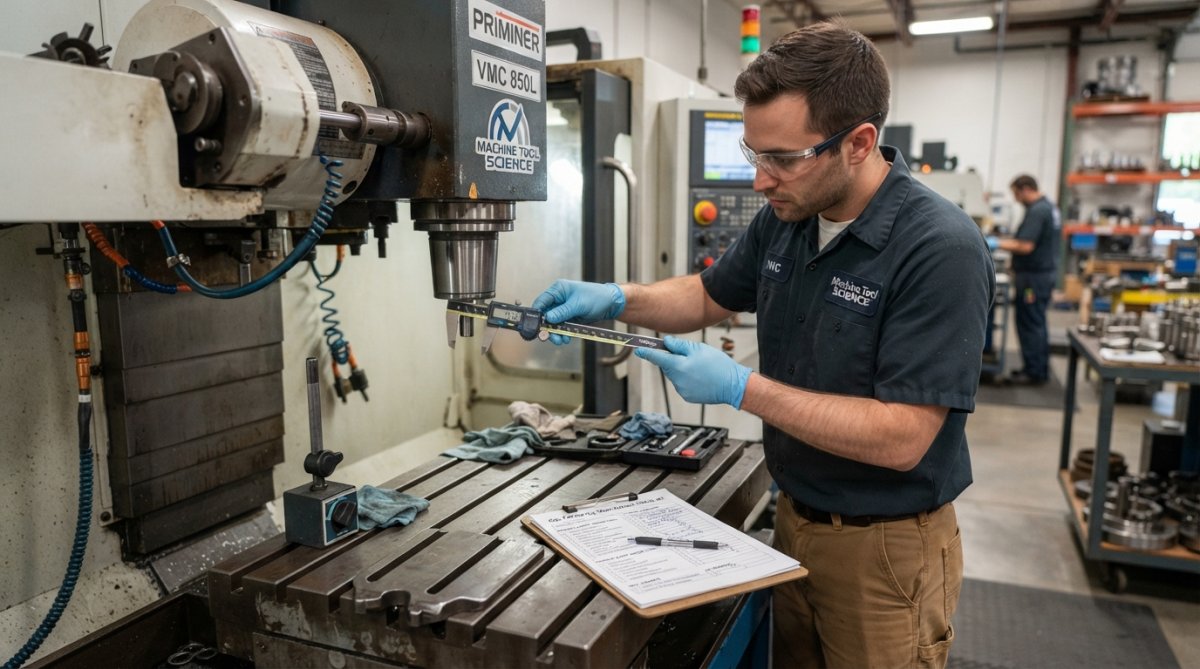
The DIY First-Aid Guide: What to Check Before You Call for Service
Most top-tier service providers will tell you that a significant portion of their emergency calls could have been resolved in-house with a structured 15-minute diagnostic routine. This is not about replacing a technician; it is about eliminating trivial faults and gathering the right information when you do need to escalate.
When a machine throws an alarm or behaves erratically, run through this sequence before picking up the phone:
- Check the Obvious Inputs: Verify the emergency stop is fully released, the door interlocks are engaged, and the spindle tool is clamped correctly. A misaligned tool can cause false load alarms.
- Inspect the Air Supply: Many CNC machines require a regulated air supply for the tool changer and way covers. Check the main air pressure gauge. If it is below the manufacturer's spec (often 80-100 psi), the machine may fault on a 'low air' alarm or fail to complete a tool change. Look for water in the filter/regulator; moisture can cause erratic solenoid behavior.
- Check the Hydraulic Unit (if equipped): Look at the fluid level and the pressure gauge. A low fluid level is a common cause of 'hydraulic pressure low' alarms, often from a slow leak. Note the exact pressure reading to report to a technician.
- Look for Simple Mechanical Jams: In a tool changer, a single stuck chip or a broken tool pot detent can halt the entire ATC cycle. Visually inspect the carousel and the gripper arm for obstructions before assuming a servo or controller failure.
- Power Cycle with a Purpose: A full power-down (including the main breaker) for 60 seconds can clear spurious controller faults caused by voltage sags or static buildup. If the alarm returns immediately after a full power cycle, you have a real hardware issue.
- Document the Alarm: Write down the exact alarm number and the text on the screen. Do not clear it repeatedly. A technician can often diagnose the root cause from the alarm history alone. For example, a 'Servo overload' alarm on the Y-axis that recurs at the same position in the travel often points to a mechanical bind or a failing ballscrew, not an electrical issue.
The 5-Minute Spindle Health Check
The spindle is the heart of the machine, and its health is visible in its behavior. Once a week, perform this simple check:
- Run the Warm-Up Cycle: Do not skip this. It is not just about thermal stability; it circulates lubricant and prevents bearing skidding.
- Listen for Noise: A healthy spindle has a consistent, high-pitched whir. Listen for a low rumble, a clicking, or a grinding sound that changes with RPM. A rumble at low RPM often indicates bearing wear.
- Check the Taper: With the spindle stopped and locked, wipe the taper with a clean cloth. Look for scoring, rust, or a bluish tint (indicating heat damage). Run a finger around the taper to feel for a ridge.
- Monitor Vibration: Place a coin on the machine table while the spindle runs at a moderate speed. If it vibrates noticeably, or if you feel excessive vibration in the machine frame, this is a sign of imbalance or bearing wear that warrants professional vibration analysis.
Scheduled Tasks That Require a Certified Technician
Professional service intervals focus on precision and calibration that in-house staff cannot perform reliably. A certified technician should handle laser calibration and ballbar testing, spindle taper inspection, and servo motor and drive tuning.
Look for a provider that documents every visit with a detailed report. When the contract includes [guidance on machine tool(https://www.machinetoolscience.com/pages/machine-tool-mafia) maintenance best practices from the Society of Manufacturing Engineers | sme.org], you know the provider is aligned with industry standards rather than improvising on your floor. The goal of a professional visit is not just to 'check the box' but to validate that your in-house routine is effective and to catch the issues that your daily checks cannot see.
Understanding CNC Spindle Rebuild Cost vs. Replacement
The decision to rebuild a spindle or replace it outright comes down to the condition of the housing and the cost relative to a new unit. CNC spindle rebuild cost varies widely because every spindle is different, and no responsible provider quotes a fixed price without first inspecting the unit.
What Drives the Price of a Spindle Rebuild
Several factors determine the final cost of a spindle rebuild. The first is the extent of damage: a spindle needing only new bearings and a re-grind of the taper costs less than one with a damaged housing or bent shaft. The second is the machine brand and spindle design; proprietary or high-speed spindles often require specialty parts. Third is the turnaround time you demand, since expedited service carries a premium.
A quality rebuild restores the spindle to original specifications, including runout tolerances and thermal stability. This is often the better financial choice when the housing is sound. Replacement makes sense when the housing is cracked, the spindle is obsolete, or the cost of rebuilding approaches that of a new unit.
When You Need Emergency CNC Machine Repair: A Response Plan
A structured emergency response plan separates a one-day disruption from a multi-week shutdown. The plan should define who has authority to call for outside help, what information you gather before making the call, and how you prioritize machines when multiple failures occur.
Common Failure Modes and the First Call Completion Advantage
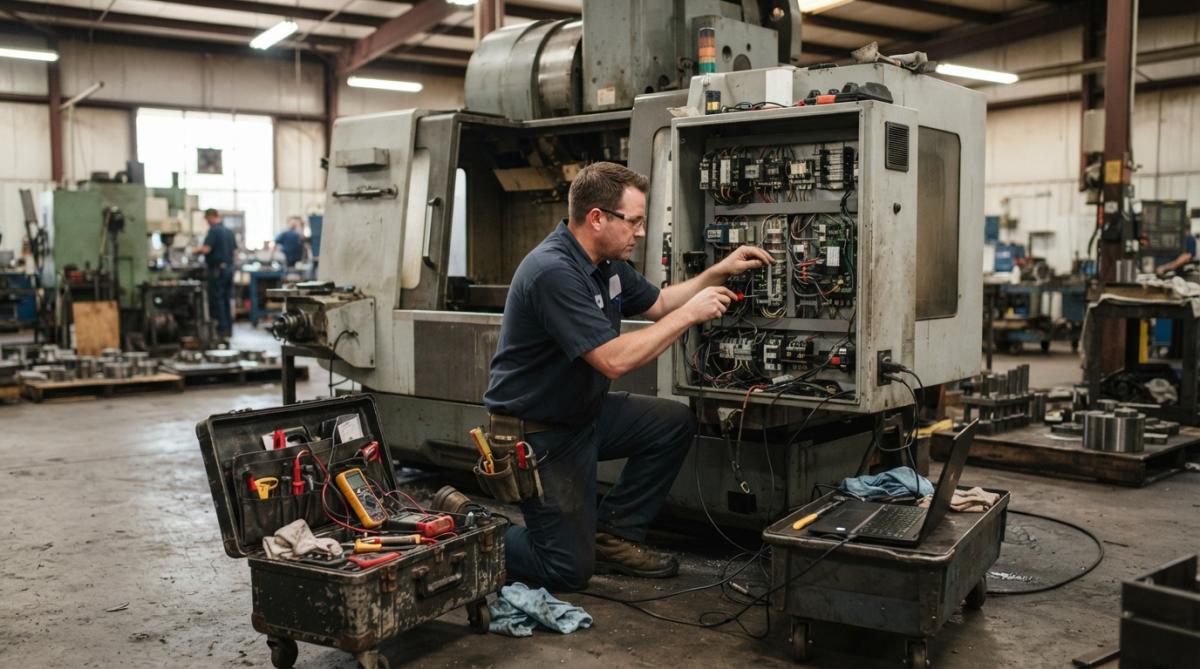
The most common emergency call types involve seized spindle bearings, servo drives that fault repeatedly, and controller issues such as a dead display or unresponsive axis. When you call for emergency CNC machine repair, the provider's ability to complete the fix on the first visit is the metric that matters most.
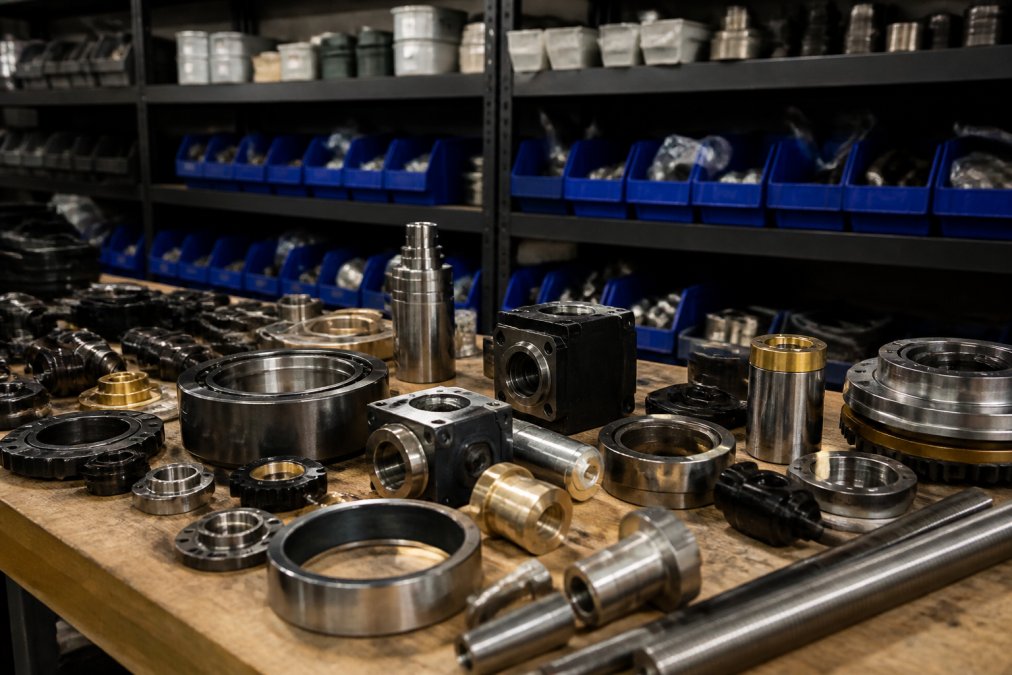
First call completion depends on two things: diagnostic skill and parts availability. A technician who isolates the root cause before quoting work will not waste your time ordering the wrong component. Ask any provider about their spare parts inventory and logistics approach for industrial service before you need them in an emergency.
How to Choose a CNC Repair and Maintenance Provider
Choosing a service partner is a trust decision, not just a vendor selection. The provider you call at 2 a.m. during a rush job needs to be technically capable, honest, and fast enough to matter.
Diagnostic Process and Transparent Quoting
The diagnostic process is where good providers earn their keep. A reputable service company performs comprehensive fault isolation before quoting any repair, identifying the failed component and the reason it failed. Replacing a servo drive without finding the short that killed it guarantees a second failure and a second invoice.
Transparent quoting follows directly from thorough diagnosis. You should receive a clear scope of work and a fixed quote before any technician begins disassembly. Machine Tool Science builds its service model around this principle: factory-trained technicians who diagnose the root cause and provide transparent rates with no surprise billing.
Questions to Ask Before You Sign a Service Agreement
Before committing to a maintenance contract, ask these questions directly:
- How many technicians do you employ, and are they factory-trained on my machine brand?
- What is your typical response time for emergency calls in my area?
- Do you stock common spindle components and CNC control parts, or do you order everything?
- Can you provide a fixed quote after diagnosis, before starting repair work?
- What is your first call completion rate?
A provider that hesitates on any of these questions is likely to cost you more in downtime than the contract saves.
The Cost-Benefit Case for Preventive and Predictive Maintenance
Skipping preventive maintenance to save money is a false economy. The cost of a scheduled service visit is small compared to the lost production from an unexpected spindle failure, and the math becomes even clearer when you factor in expedited repair premiums and overtime labor. But to make a defensible business case, you need a framework for calculating the true cost of downtime and a clear-eyed view of which predictive technologies actually pay for themselves.
Building a Downtime Cost Model That Justifies the Budget
The first step is to calculate your shop's true cost of downtime. Most shops only count the burden rate of the machine, but that misses the largest cost. A more accurate model includes:
- Lost Contribution Margin: The profit you would have made on the parts that were not produced. This is often 3-5 times the machine burden rate.
- Expedited Freight and Overtime: The premium you pay to rush replacement parts and to have operators work overtime to catch up on the backlog.
- Rush Repair Premiums: Emergency service calls often carry a 1.5x to 2x hourly rate premium over scheduled visits.
- Downstream Impact: The cost of delayed shipments to your customers, which can include late penalties or, worse, lost future orders.
A common pattern in job shops is that a single 8-hour spindle failure on a critical machine can cost more than an entire year of scheduled preventive maintenance visits. When you put that number on a spreadsheet, the decision becomes obvious. The goal is to shift the conversation from 'cost of maintenance' to 'cost of risk.'
Predictive Maintenance: Which Technologies Pay Off First
Predictive maintenance is not a single technology; it is a spectrum. The key is to start with the highest-ROI, lowest-cost sensors and build from there. Here is a practical look at what is available today and where it works best:
- Vibration Analysis (The First Step): This is the most mature and cost-effective predictive technology for rotating equipment. A handheld vibration pen or a permanently mounted sensor on the spindle housing can detect bearing wear, imbalance, and misalignment weeks before they cause a failure. The key metric is overall vibration velocity (measured in inches per second, ips). A sudden increase of 0.1 ips over a baseline reading is a clear warning sign. Many shops start with a handheld unit that a technician uses during a scheduled visit, which is a low-cost way to build a baseline.
- Spindle Load Monitoring (Built-In): Most modern CNC controls already monitor spindle load and servo current draw. This data is often underutilized. By tracking the baseline load for a standard cutting cycle, an increase of 10-15% can indicate tool wear, a dull tool, or a developing mechanical problem in the spindle or feed axis. This is a zero-cost predictive tool that is already on your machine.
- Thermal Imaging (For Electrical Cabinets): Loose connections and failing components in the electrical cabinet generate heat. A yearly thermal scan of the cabinet, performed under load, can identify hot spots that will eventually cause a short or a drive failure. This is a low-cost, high-value check that is often overlooked.
- IoT-Enabled Continuous Monitoring (The Next Level): For critical-path machines, permanently mounted sensors that stream data to a cloud dashboard are becoming more common. These systems can provide real-time alerts on vibration, temperature, and current draw. The value proposition is clear: they can catch intermittent faults that a periodic check might miss. However, they are not necessary for every machine. The best practice is to reserve continuous monitoring for your bottleneck machines where an unplanned stop has the greatest financial impact.
The data from the Department of Energy's assessment of predictive maintenance technologies shows that condition-based monitoring strategies reduce breakdown maintenance significantly compared to reactive approaches. For shops running critical machines, the investment in monitoring pays for itself the first time it prevents an unplanned shutdown.
| Maintenance Approach | Cost Profile | Downtime Risk | Best For |
|---|---|---|---|
| Reactive (run to failure) | Low upfront, high emergency costs | Highest | Non-critical, redundant machines |
| Preventive (scheduled) | Moderate, predictable | Low | Most production CNC machines |
| Predictive (condition-based) | Higher upfront, lowest long-term | Lowest | Critical-path, high-value spindles |
Conclusion: Building a Maintenance Strategy That Protects Uptime
Building a maintenance strategy that protects uptime requires a shift in mindset from "fix it when it breaks" to "manage the machine's health deliberately." That means assigning daily and weekly tasks to your own team, scheduling professional service intervals for calibration and precision work, and having a documented emergency response plan before you need it.
Machine Tool Science supports manufacturers across the Southeast with factory-trained technicians who diagnose root causes and provide transparent rates with no surprise billing. Whether you need emergency CNC machine repair, a scheduled preventive maintenance program, or a spindle rebuild, our team is equipped to keep your operations running efficiently.
Get started with Machine Tool Science and build a maintenance plan that protects your production schedule.
Frequently Asked Questions
How often should a CNC machine be serviced?
Most CNC preventive maintenance checklists call for a basic inspection every 500 operating hours or quarterly, whichever comes first. A more thorough service, including calibration and alignment checks, is typically scheduled annually. High-production machines running three shifts may need monthly inspections. The right interval depends on your machine type, age, and cutting conditions. A service provider can review your usage data and set a schedule that catches wear before it causes a breakdown.
What does a CNC maintenance technician do?
A CNC maintenance technician performs scheduled preventive maintenance and repairs breakdowns. On preventive visits, they check lubrication systems, inspect belts and filters, verify spindle alignment, test servo motors and drives, and run diagnostics on the controller. For emergency CNC machine repair, they diagnose the fault, source parts, and complete the repair to get the machine back into production. A good technician focuses on finding the root cause rather than just swapping parts.
What are the most common causes of CNC machine failure?
Electrical failures, especially in servo motors, drives, and circuit boards, account for a large share of CNC breakdowns. Mechanical issues like spindle bearing wear, ball screw backlash, and way damage are also common, often caused by inadequate lubrication. Dirty coolant systems and clogged filters lead to overheating. Many of these failures are preventable with a consistent preventive maintenance program that includes regular cleaning, lubrication checks, and thermal imaging of electrical cabinets.
How much does CNC spindle rebuild cost compared to replacement?
CNC spindle rebuild cost is typically a fraction of the price of a new spindle assembly, often 40 to 60 percent less. The final figure depends on the spindle size, bearing type, and the extent of damage to the taper or internal components. A rebuild can also be faster than waiting for a replacement unit to be delivered. Contact a service provider for a quote; they should inspect the spindle and provide a firm price before starting work.